
Why a Free Posture App Can't Compare to Clinical Software
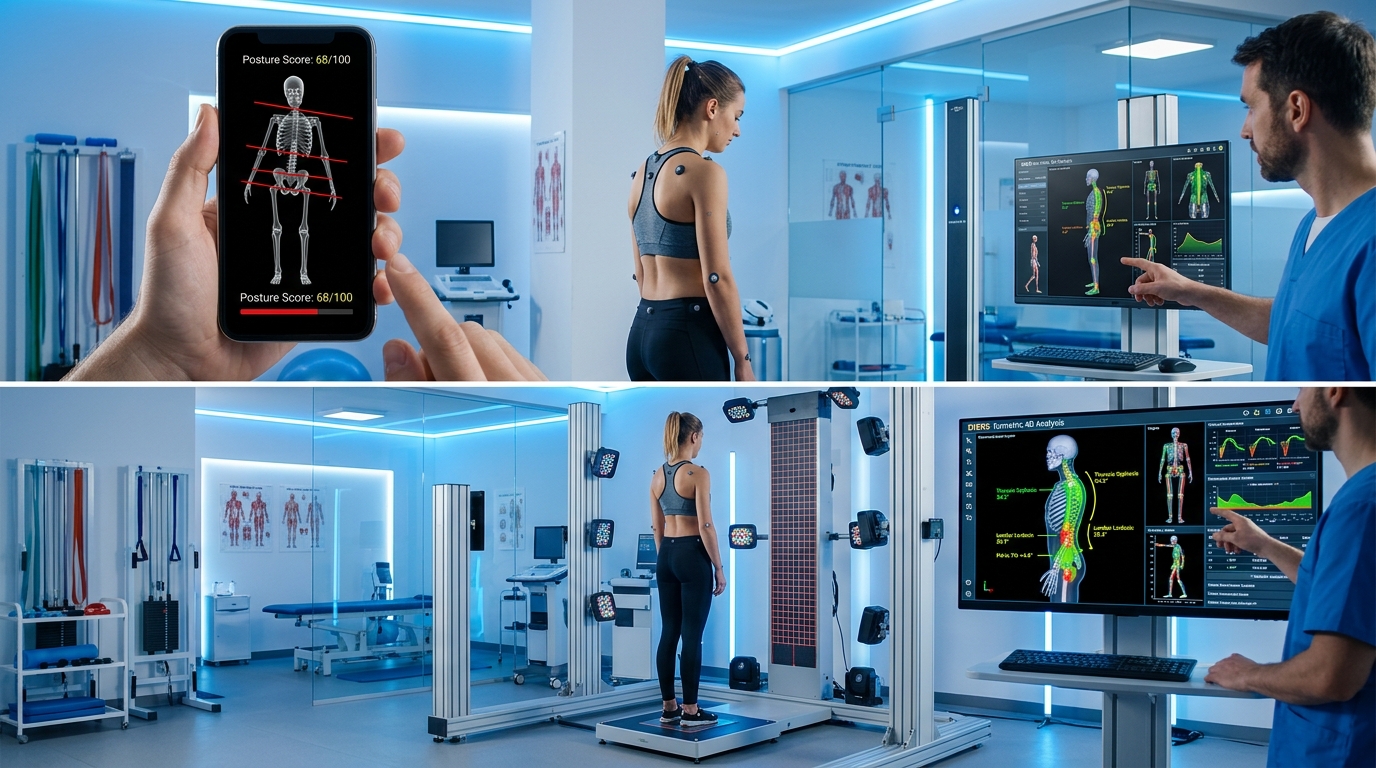
In the modern era of digital health, patients and practitioners alike are flooded with options for a body posture app. From a simple posture app iphone download to complex web-based tools, the market is saturated. But when it comes to true clinical diagnostics, is a standard posture screen app enough to guide a medical treatment plan?
The Rise of the Consumer Posture Check App
It is easy to see the appeal of a posture check app or a basic posture correction app. They are accessible, often free, and provide immediate, gamified feedback to the user. A typical posture scale app allows a user to stand in front of their smartphone camera while the software draws basic alignment grids over their body.
However, the clinical reality of a posture screen app is that it relies heavily on a 2D camera lens and subjective user placement. A smartphone camera cannot account for depth, rotational deformities of the spine, or the dynamic load acting upon the musculoskeletal system. It assumes the camera is perfectly level and the patient is perfectly perpendicular to the lens—a rare occurrence in real-world scenarios.
Posture Apps vs Body Investigation: The Clinical Chasm
When comparing consumer posture apps vs body investigation using medical-grade systems, the precision gap is vast. A basic body posture app might tell a patient their head is positioned too far forward. A clinical 3D posture analysis system, however, will calculate the exact degree of cervical lordosis deviation, correlate it to anterior pelvic tilt, and map the plantar pressure distribution simultaneously.
Physiotherapists must ask themselves: Can a posture check app accurately measure a Cobb angle? Can a posture correction app track the millimeter-level changes in scapular asymmetry over a 6-week rehabilitation program? The answer is definitively no. Clinical body investigation requires 3D depth sensors, AI-driven landmark recognition, and reproducible environmental controls that a smartphone simply cannot provide.
What is the Best Posture App?
If you are a consumer looking for basic awareness of your sitting habits, the best posture app is one that simply reminds you to sit up straight and take breaks from your desk. However, for a physiotherapist, chiropractor, or orthopedic specialist, no smartphone application can replace a CE-certified, AI-driven posture analyzer device.
The Dangers of Relying on a Posture Scale App in Clinics
- False Positives: A slight angle of the smartphone camera can artificially create the appearance of scoliosis or leg length discrepancy on a posture scale app.
- Lack of Depth Perception: 2D cameras fail to capture axial rotation, which is critical in diagnosing spinal deformities.
- Data Security: Many consumer-grade posture app iphone solutions do not comply with strict medical data privacy laws (HIPAA, GDPR) required for patient records.
The Transition to Medical-Grade AI Posture Systems
Top-tier clinics have recognized the limitations of the posture screen app and are upgrading to dedicated hardware and software ecosystems. Systems like CIBODY utilize advanced optics and machine learning algorithms trained on thousands of clinical X-rays to provide biometric data that rivals traditional radiography—without the radiation exposure.
Clinical Takeaway
Transitioning from a subjective posture correction app to a professional Posture Analysis Software is the fastest way to build patient trust, ensure diagnostic accuracy, and justify advanced treatment plans. Leave the body posture app to the consumers; equip your clinic with clinical body investigation tools.
Frequently Asked Questions (Clinical Apps)
Is a posture app iphone reliable for diagnosing scoliosis?
How does the best posture app compare to CIBODY?
Comparison: Smartphone Posture App vs CIBODY Clinical System
| Feature | Consumer Posture App (Smartphone) | CIBODY Clinical Body Analyzer |
|---|---|---|
| Measurement Accuracy | Low (Camera distortion, angle errors) | Medical Grade (99.2% accuracy, 64-point tracking) |
| Regulatory Compliance | None (Not a medical device) | CE, ISO 13485, Ministry of Health Approved |
| Foot Gait Analysis | No (Smartphones cannot measure plantar pressure) | Yes (Dynamic Plantar Pressure Sensors included) |
| Patient Data Security | Uncertain (Cloud privacy concerns) | HIPAA & GDPR Compliant Local/Secure Storage |
The Deep Dive: Why Clinical Environments Demand Hardware Over Smartphone Posture Apps
When evaluating the difference between a free posture app and a medical-grade posture analysis system, clinicians must consider the biomechanical realities of orthopedic assessment. A smartphone posture check app relies on standard RGB cameras, which are highly susceptible to lens distortion, variable focal lengths, and inadequate lighting conditions.
1. The Precision Gap: Millimeters Matter in Physiotherapy
A consumer-grade posture correction app uses generic AI models trained on standard human images to guess joint positions. In contrast, clinical postural assessment software like CIBODY uses fixed-distance, high-resolution 3D optical sensors. These sensors perform a 64-landmark digital posture analysis that tracks micro-deviations in spinal alignment (such as mild scoliosis or forward head posture) with 99.2% accuracy. A smartphone app simply cannot detect a 2mm pelvic tilt difference due to parallax error.
2. HIPAA and GDPR Compliance: Data Security in Clinical Posture Tracking
Using an app for posture correction downloaded from an app store poses a massive medical data security risk. Images taken on a personal or clinic iPad via a generic posture app iphone often sync to unencrypted clouds like iCloud or Google Photos. CIBODY’s medical-grade postural analysis system ensures that all 3D posture analysis data is processed locally or on highly secure, HIPAA/GDPR-compliant servers, ensuring absolute patient confidentiality.
3. Reproducibility: The Gold Standard of Gait and Posture Assessment
Scientific posture assessment tools require reproducibility. If you measure a patient on Monday and again on Friday, the environmental variables must be identical. A clinician holding a phone running a postural analysis app will inherently introduce varying angles, heights, and distances. Dedicated hardware ensures exact spatial calibration every single time, validating the true efficacy of your physiotherapy interventions.